Dropshipping Is Not Dead. Lazy Dropshipping Is
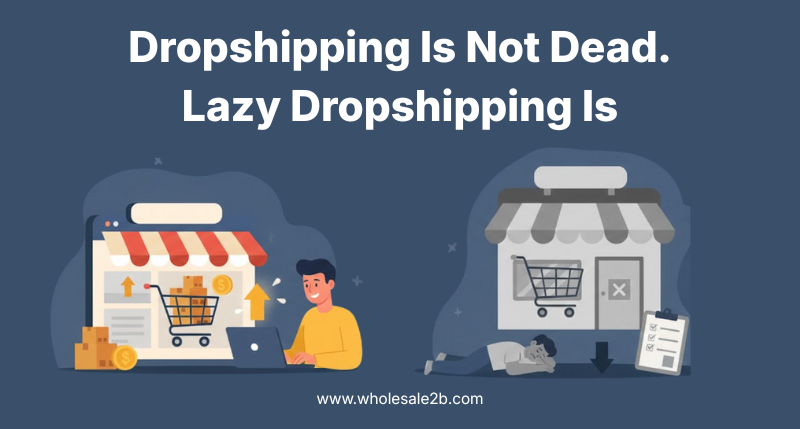
Many people believe dropshipping has become unprofitable. The business model seems dead to most observers. The reality shows only lazy dropshipping has reached its end. Traditional approaches that worked years ago no longer deliver results today.
Smart dropshipping remains a viable business model. The 90% failure rate doesn't stem from fundamental flaws in the model. People simply give up after a few attempts. Success demands consistent testing rather than exceptional intelligence.
The first sale transforms everything in your dropshipping experience. This guide will help you find why lazy dropshipping fails and what strategies work today. You'll learn to build a profitable dropshipping business. The gap between success and failure comes down to one question: Will you do the work that others avoid?
The myth: Is dropshipping really dead?
YouTube and social media channels love to declare "Dropshipping is Dead" every few months. These claims suggest newcomers won't succeed in what they call an oversaturated business model. But data paints a different picture. The global dropshipping market keeps growing and experts expect it to expand by a lot through 2026.
Why people think dropshipping is over
People believe dropshipping doesn't work anymore due to several misconceptions. Many aspiring entrepreneurs see it as a path to quick riches. They jump in expecting instant profits without learning business basics.
Stories about new dropshipping stores failing within their first four months add to this negative view. This stat sounds scary until you realize most failures happen because people don't run their business properly, not because the model doesn't work.
Success stories about people making fortunes with minimal work attract many newcomers. They start with unrealistic expectations and poor preparation. The moment they don't see quick results, they blame the business model.
Customer service problems fuel the "dropshipping is dead" myth too. A new store can quickly fail due to shipping delays, returns, and refund issues. These problems snowball without proper systems in place.
The rise of saturated markets and copycat stores
The dropshipping space gets more competitive as new entrepreneurs join. Big platforms now test budget storefronts that ship unbranded products straight from overseas warehouses. Large companies with deep pockets handle most online sales.
The model's biggest weakness lies in how easily others can copy your business. Copycat stores pose a real threat to legitimate operations.
Picture this scenario: Your store runs profitable ads for months, showing competitors you're making money. They can find your product images on Google, spot identical items on AliExpress, and clone your entire business in just one day. Facebook Ad Library lets them copy your marketing campaigns while ChatGPT helps rewrite product descriptions without plagiarism.
Some store owners find exact duplicates of their websites, including their paid product photos and Google ads. Even after filing many DMCA reports that temporarily remove copies, persistent copycats keep relisting items.
These challenges haven't killed dropshipping. The market isn't really oversaturated. Many niches remain open for entrepreneurs who treat dropshipping like a real business instead of a quick money grab.
Successful dropshippers now focus on:
- Building unique brands that deliver great customer service
- Getting exclusive supplier deals to stop copycats
- Adding real value beyond simple product reselling
- Targeting specific niches instead of general products
The real story? Dropshipping lives on, but lazy, generic approaches don't work well anymore. A proper business approach with good planning, customer focus, and smart strategy can still lead to profits.
What lazy dropshipping actually looks like
Many aspiring entrepreneurs dive into dropshipping with minimal effort and sky-high expectations. This approach sets them up for disappointment and failure. Let's get into what lazy dropshipping looks like and why it doesn't work in today's competitive market.
No product research or testing
Lazy dropshipping starts with skipping proper product research and validation. Beginners pick products based on possible profits rather than real market demand or personal interest. A lack of passion and knowledge will burn you out and disconnect you from your business.
Most lazy dropshippers don't test their products before scaling up. They don't order samples or check quality firsthand. They list hundreds of unproven items and hope something sells. The truth is simple - you need products with high perceived value and healthy profit margins to make money.
Successful dropshippers find winners through testing. They run small ad tests and try different marketing angles. They study what gets clicks before scaling up. Even top sellers test before they invest heavily in inventory or marketing. A single bad product can damage your store's reputation.
Relying on generic ads and templates
Generic, uninspiring marketing materials are clear red flags of lazy dropshipping. Bad photos and low-quality videos hurt credibility and drive potential customers away. Generic ads don't work because they fail to connect with specific audience behaviors and interests.
Your ads need to be tailored to create stronger connections and boost sales. Lazy dropshippers use the same template-based ads as everyone else. They don't realize that people in today's fast-scrolling world ignore lengthy descriptions and overwhelming information.
Marketing success depends on creativity and customized content. Lazy dropshippers spend money only on paid traffic. They don't invest in content creation or brand building. This short-term thinking results in high customer acquisition costs with zero loyalty.
Ignoring customer experience
The worst part of lazy dropshipping is poor customer experience. Beginners focus on making quick sales and forget what happens next. They treat suppliers like fulfillment machines instead of vital business partners.
Many lazy dropshippers disappear after getting paid. Their customers have nowhere to turn when problems come up. These sellers forget that customers only know their brand, not the suppliers. Problems pile up fast when shipping delays, packaging issues, or quality concerns appear.
Customer service makes or breaks dropshipping success. Without good support systems, problems multiply:
- Slow responses create angry customers
- Bad packaging ruins first impressions
- No tracking updates cause shipping anxiety
- Unresolved issues with missing or damaged items destroy trust
Yes, it is true that many dropshipping businesses fail because they put everything into marketing and nothing into customer experience. This strategy wastes ad money while stores die from low sales and bad reviews.
Note that suppliers handle products, but you own customer relationships in dropshipping. Running ads without building trust leads straight to failure. Online stores with bad customer experiences fade away into the digital world, unlike physical stores that might survive on location alone.
Why lazy dropshipping fails
The current dropshipping landscape looks nothing like its early days. More entrepreneurs keep entering this space, making the line between success and failure clearer than ever. Industry experts note that only 10 to 20 percent of dropshipping businesses survive long-term. The business model works fine - most sellers just can't keep up with market realities.
Lack of differentiation in a competitive market
Standing out has become essential in today's saturated dropshipping environment. North American dropshipping businesses now target niche markets instead of general product categories. This change happens because buyers prefer curated stores that match their specific interests.
Generic dropshipping stores struggle to compete for several key reasons:
- You end up competing solely on price without adding value through quality information and guidance
- Multiple stores selling similar products create a race to the bottom on margins
- Buyers have grown skeptical of generic online stores with similar offerings
One experienced dropshipper puts it well: "Charging extra for the same product when you don't add any value isn't viable long-term, since low barrier-to-entry means more competition and less differentiation". Customers need solid reasons to pick your store over dozens of others selling similar items.
Research can help you find a profitable niche, yet many dropshippers skip this vital step. Social media platforms like Instagram, TikTok, and Twitter are a great way to get insights into changing customer priorities. All the same, your store becomes just another face in the crowd without proper market analysis.
Short-term thinking and no brand loyalty
Short-term thinking that pervades lazy dropshipping creates another major failure point. Many newcomers think they'll build a passive six-figure income after a few months of part-time work. Building a business that generates an average full-time income takes at least a year.
Customer loyalty is the life-blood of any successful business. Satisfied buyers come back and recommend your store to others. Lazy dropshippers focus only on getting new customers while ignoring existing ones.
A strong brand identity helps dropshipping businesses stand out by building trust and credibility. Customers feel no emotional connection to your store without this foundation. So, each sale costs as much to acquire as the first one.
Your customer service quality affects your brand's reputation, customer loyalty, and bottom line. Many dropshippers disappear after collecting payment, leaving customers alone when problems arise. Note that exceptional customer service isn't optional - it's essential for success in ecommerce.
Overreliance on outdated tactics
Old dropshipping tactics don't work anymore. One dropshipper found that "the strategies I was using were completely outdated". Copying product listings from suppliers, running generic Facebook ads, and accepting month-long delivery times rarely works today.
Buyer expectations have risen. Modern customers just need polished branding, reliable shipping, quality packaging, and responsive support. Generic-looking stores with slow shipping hurt both conversion and retention rates.
Higher competition plus increased supplier and shipping costs squeeze profit margins. Product selection and managing customer lifetime value matter more than ever.
Smart sellers use dropshipping to verify product-market fit. Most successful businesses take control of their supply chain rather than staying purely in the dropshipping model for long-term profits.
Dropshipping works when treated like a real business instead of a get-rich-quick scheme. The difference between failure and success lies in evolving beyond old tactics, creating real differentiation, and building lasting customer relationships through consistency and excellent service.
What still works in dropshipping today
Dropshipping remains a profitable business model when done right, no matter what skeptics say. The difference between success and failure boils down to three core elements that still work well today.
Focusing on one winning product
Smart dropshippers no longer list hundreds of random items. They find and promote one winning product at a time. This targeted approach helps them focus their marketing efforts and simplify operations.
Products that win solve specific problems or address daily customer frustrations. Pet grooming tools, posture correctors, and kitchen gadgets offer clear value right away. These items share key traits - they're high-quality, look great, and ship easily both in the country and abroad.
The best dropshipping products create "scroll-stopping" moments. They grab attention through quirky designs, unexpected features, or clever transformations that pop on busy social feeds. These products spark emotions like curiosity or excitement, which leads to more impulse buys.
Product research makes or breaks dropshipping success. Smart sellers use multiple sources:
- Monitoring Amazon's best-selling lists
- Studying social media platforms like TikTok and Instagram
- Using Pinterest Trends to identify popular products by location or niche
- Analyzing AliExpress trending items
Testing products before scaling up is crucial. You should order samples, check quality yourself, and run small ad tests to see market response before spending big.
Building a simple, high-converting store
Modern dropshipping stores put simplicity and user experience first, not endless product lists. Visitors judge your site in 15 seconds, so first impressions count.
Stores that convert well share key features. They use clean, professional designs with accessible navigation. Trust badges, clear return policies, and real customer reviews help buyers feel confident.
Your store must match your ads perfectly. The landing page should deliver exactly what your ad promised without any confusion.
Picking one niche or product type builds trust and makes sense. General stores with random products don't deal very well with focused competitors who know their market inside out. Your store should show you're an expert in your chosen field.
Mobile shopping dominates the market now. Your store needs continuous connection across all devices. Quick loading times, easy navigation, and simple checkout are must-haves.
Creating scroll-stopping content
Basic product photos don't drive sales anymore in our content-heavy world. Top sellers create content that makes people stop scrolling through social platforms.
Movement catches eyes better than anything else. Short videos or simple animations stand out among static posts. Even small touches like animated arrows pointing to products or shaking CTA buttons boost engagement.
People connect with people. Adding hands, faces, or full demonstrations with real people makes conversion rates jump. One expert notes, "Ads disguised as influencers or content creators subtly selling a product might trick viewers into watching the full ad, since it doesn't instantly register as an advertisement".
User-generated content (UGC) beats traditional marketing by miles. Campaigns that use UGC see 28% higher web conversions. This real-life content builds trust and helps overcome doubts about dropshipping stores.
Content that creates mystery works best. Rather than listing every feature upfront, successful dropshippers tell stories that make viewers want to learn more. This approach gets more clicks and engagement than direct selling.
How to make dropshipping profitable
Three fundamental strategies separate profitable dropshipping stores from those that don't work well. Many people ask "is dropshipping still profitable?" These applicable tactics deliver real results instead of empty promises.
Test multiple creatives and angles
Testing different creatives builds the foundation of profitable dropshipping operations. This analytical approach lets you try various elements to see what appeals to your target audience. You can identify purchase triggers and grow your business by testing multiple creative concepts systematically.
Smart dropshippers test these elements at the same time:
- Different CTA buttons and headlines with the same creative
- Video versus image formats (including carousels)
- Square versus vertical video orientations
- Same visuals with different accompanying text
A logical testing structure combines these variables methodically. To name just one example, try video 1 with text 1, video 2 with text 2, video 1 with text 2, and video 2 with text 1 to see what truly boosts conversions.
Patience plays a vital role during testing. You should set a realistic timeframe of at least a week per test to gather meaningful data before making decisions. Note that performance might dip at first during experimentation. This temporary setback guides you to better results as you find winning combinations.
Use data to guide decisions
Rather than relying on gut feelings or copying others, analytical insights turn dropshipping from guesswork into science. This systematic approach focuses on key performance indicators, financial data, and consumer insights.
Your business goals should shape your main objective. Then identify measurable factors like conversion rates, engagement metrics, or audience responses. The collected data reveals patterns that show what works best.
Customer behavior on your website shows which marketing channels bring the highest ROI. Successful dropshippers see their initial marketing campaigns as opportunities to gather data that helps refine their strategy.
Dropshippers who use analytical product research methods achieve 3.2x higher success rates than those using conventional methods. Simply put, numbers tell stories that instinct alone misses.
Invest in customer service and retention
Customer retention holds exceptional value in dropshipping economics. Getting a new customer costs 4-10 times more than keeping an existing one. A modest 5% increase in customer retention can boost profits by 25-95%.
The chances of selling to an existing customer range from 60-70%, while new prospects only convert at 5-20%. These numbers make a strong case to focus on your current customers.
Great retention starts with exceptional customer service across multiple channels. Quick support through email, social media, and live chat makes a difference. Quality issues need immediate attention rather than waiting for complaints.
Proactive communication about potential issues builds trust. Automatic order confirmations and shipping notifications keep customers informed. A detailed FAQ section helps customers find quick answers without waiting for responses.
Your customer's experience should feel tailored to them. Create segments based on demographics, purchase history, and priorities. This information helps provide personalized product recommendations and marketing messages that match individual needs.
Profitable dropshipping needs a scientific approach to testing, data analysis, and customer relationships. Random product selection and generic marketing no longer work. Strategic decisions backed by evidence and focused on long-term value have taken their place.
The mindset shift: From quick cash to real business
The secret to profitable dropshipping isn't about tactics - it's about your business mindset. Every successful dropshipper goes through a vital mental change from chasing quick profits to building something that lasts.
Why consistency beats luck
People quit dropshipping too soon. Raw talent, luck, or even quality take a back seat to consistent effort in the long run. Talented people are everywhere, but only a few show true consistency in their work. Many beginners don't realize that success comes through sustained effort over time.
Here's the truth: consistency might make you feel like a loser for the first few months. You'll pour hours into working, trying, failing, and starting again. Understanding this reality early helps prevent disappointment when instant success doesn't happen.
How the first sale changes your belief
Your first dropshipping sale will change everything about your point of view. The business becomes real instead of just an idea. A store owner put it well: "I remember the first sale...it was awesome...but also very important...because then you know that you can do it".
This milestone proves the business model works. One dropshipper shared, "Just got my first sale this morning. Honestly didn't feel much I put in the hard work and paid off pretty simple". That first sale shows your efforts are moving you forward.
Thinking like a brand owner, not a hustler
Traditional dropshipping runs on slim margins because customers easily switch to cheaper options. Your mindset needs to focus on building a brand people love rather than chasing quick money.
Branded dropshipping turns simple product sales into lasting customer relationships. This approach needs a clear identity, products matching your values, and a consistent experience at every touchpoint.
Your focus naturally moves toward building systems that handle more orders without losing the personal touch. Customers feel connected to your brand and stay loyal even when competitors offer lower prices.
Conclusion
Dropshipping definitely remains a viable business model despite what naysayers might claim. In this piece, we've distinguished between lazy dropshipping practices and strategies that work today. Success in this field depends on your ability to adapt to current market realities rather than sticking to outdated tactics.
Try Wholesale2B Totally Risk-Free
-

-

-

-

-

-
500K+